Smart locks fail differently in Bali than anywhere else we have worked. It is rarely the electronics — it is the teak door that swells 3 mm in the wet season and binds the bolt, the powder coating that blisters in salt air, the guest who lets the battery die during a full-moon weekend. After fitting hundreds of locks on villa doors from Canggu to Nusa Dua, here is how the three brands we are most often asked about actually compare — and, more importantly, which lock suits which door.
Start With the Door, Not the Lock
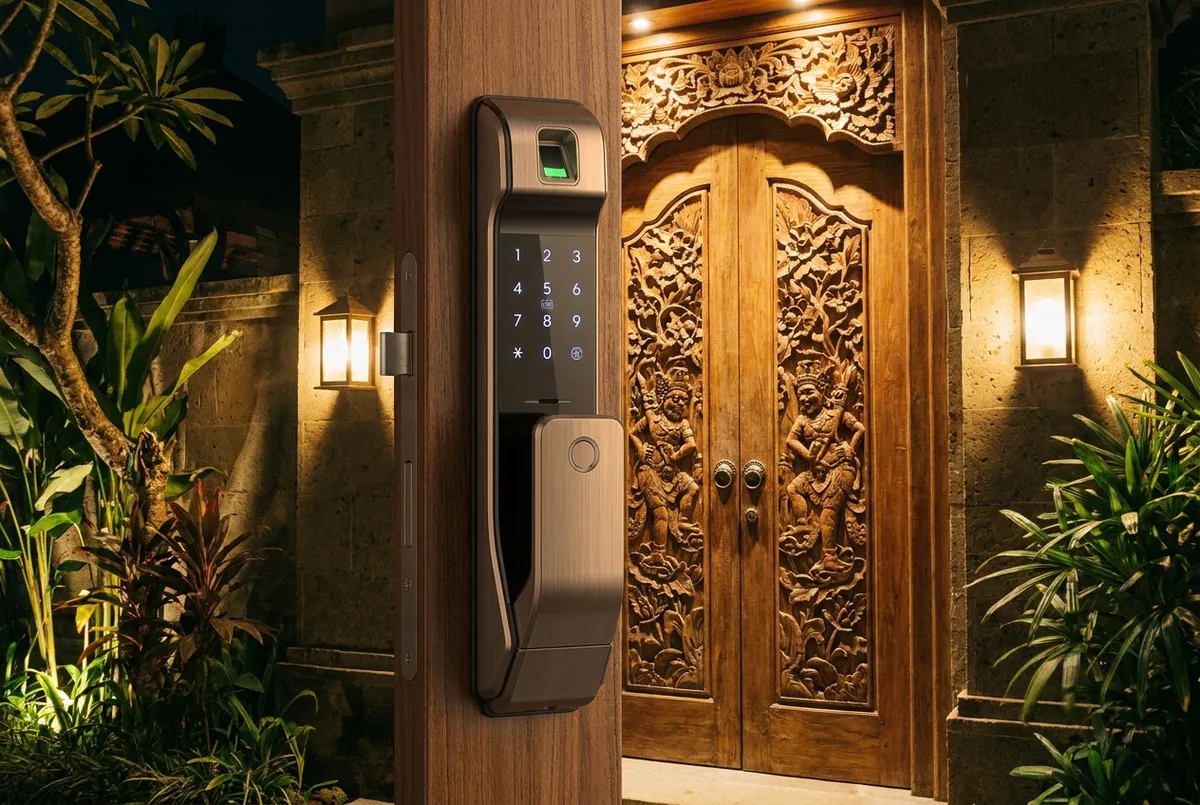
Wooden swing doors — the classic villa entrance — are the easy case. Any good mortise smart lock fits, but the door itself moves with the seasons: a lock aligned in August can bind by January. We fit locks with a little tolerance in the strike plate and adjust alignment at handover, which prevents the most common "my lock is broken" call-out (it is almost never the lock).
Sliding doors catch everyone out. A standard smart deadbolt physically cannot work on them — they need a hook-bolt mortise, and only some smart lock ranges include one. If your main entrance slides, your shortlist shrinks to the models built for it; this is the single most common reason a lock bought online in Singapore ends up in a drawer.
Gates live the hardest life: direct rain, sun and salt. Fully exposed electronics die young, so we fit rim-style keypad locks with covers, or keep the electronics on the protected side of the gate entirely. Within a kilometre of the beach, stainless or marine-coated hardware is not optional — standard finishes corrode visibly within a year.
Aqara vs Yale vs Tuya, Honestly
Aqara is our default for automated villas. The locks run Zigbee, which means they join the same local hub as the lighting and sensors and keep working — codes, fingerprints, automations — when the internet is down. Fingerprint readers are fast and reliable in humid conditions, battery life is realistic (six months or more in practice), and integration is deep: the lock can arm cameras, kill the AC and run a "goodbye" scene when the door locks. The catch: fewer body styles, so unusual doors sometimes rule it out.
Yale is the establishment choice — solid mechanical engineering, wide range of mortise bodies that suit heavy hardwood doors, and locksmiths across the island know the brand. The smart side is competent rather than brilliant; some models bridge to apps through a WiFi module that adds cost and a cloud dependency. We specify Yale where the door deserves premium mechanics — big teak entrance doors, especially — and where the owner values the mechanical pedigree over deep automation.
Tuya-based locks (sold under dozens of names) are the budget tier, and they are genuinely usable now: fingerprint, PIN, card and app for a third of the price of the majors. Quality varies wildly between the good factories and the bad ones — buying blind online is a lottery, and the WiFi-only models drain batteries and go offline with the router. We fit specific Tuya models we have tested for rented villas, staff doors and interior doors, where the price makes sense and the risk is lower.
Guest Codes: the Rental Superpower
For rental villas the lock is not a convenience, it is the check-in system. A code is created for each booking, starts working at check-in, expires at check-out, and the cleaner gets her own permanent code that logs when she arrives. No key handover moped rides, no "the guest lost the key" deposits, and the owner sees every entry in the app from abroad. This workflow — more than any other feature — is why Airbnb hosts automate: it removes the most fragile step of every turnover. On Aqara locks the codes live on the lock and hub, so check-in works even if the villa internet is down that morning.
Batteries, Blackouts and the Wet Season
Every smart lock question eventually arrives at "what if the battery dies?". The honest answer: it warns you for weeks first (app alerts from around 20%), and if everyone ignores the warnings there is an emergency contact on the outside — USB-C or 9V — that powers the lock long enough to open it, plus a physical override key that belongs in a lockbox or with a manager, not in a drawer inside the locked villa. On our installs the hub also nags the villa manager, which is why we see the flat-battery lockout roughly never.
Wet-season practice from the field: silica sachets replaced at service visits in coastal lock bodies, alkaline batteries rather than cheap zinc ones (they fade predictably instead of dying suddenly), and lock firmware set to local — not cloud — code verification so a soggy internet day never stands between a guest and the door.
What Locks Cost Installed
Fitted and integrated with the villa hub, budget Tuya models land around IDR 2–3 million, Aqara from IDR 3,500,000 — the price on our smart locks service — and Yale mortise models from roughly IDR 5–8 million depending on the body. Most villas mix tiers: the premium lock on the entrance guests touch, mid-tier on the pool-house and staff doors. Installation includes the part people skip when self-fitting: aligning the mortise for seasonal wood movement, wiring the hub integration and setting up the code workflow for turnovers.